
In-depth Review of the NVIDIA GeForce RTX 3080 Founders Edition

Intro
Diving into the world of high-performance graphics cards, the NVIDIA GeForce RTX 3080 Founders Edition stands as a formidable player. Tailored for both avid gamers and competitive esports enthusiasts, this card showcases an impressive blend of technology and design. As the gaming landscape continues to evolve, the demands on hardware grow more rigorous. The RTX 3080 is not just another piece of hardware; it’s an emblem of progress in graphical rendering, offering players superior performance and visual fidelity.
In this article, we aim to peel back the layers surrounding the RTX 3080 Founders Edition. From specs that make tech lovers drool to performance metrics that can hold a candle to the most competitive settings in Dota and other titles, we’ll explore every facet of this graphics card. Additionally, how it navigates the waters of thermal management and power consumption will be discussed, confirming its value not only to casual gamers but also to serious competitors. With future developments in mind, we’ll assess the innovations spearheaded by this model and their implications on what's to come.
This comprehensive examination will cater to enthusiasts and informed buyers alike, ensuring everyone walks away with a deeper understanding of the NVIDIA GeForce RTX 3080 Founders Edition. The synergy between cutting-edge technology and competitive gaming is more relevant than ever, and the RTX 3080 is positioned at the crossroads of these fields. As we take this journey, expect insights to flow like a well-placed gank in a strategic laning phase.
Prelims to NVIDIA GeForce RTX
The NVIDIA GeForce RTX 3080 stands as a landmark achievement in the graphics card industry, ushering in a new wave of performance and technology. Understanding its significance requires a closer look at both the advancements it brings to the table and its implications within the broader gaming landscape.
Overview of the RTX Series
Launched in late 2020, the RTX 3000 series is a powerhouse lineup designed to cater to the ever-growing demands of gamers and content creators alike. This generation utilizes the Ampere architecture, which enhances the performance per watt over the previous Turing-based series. Each graphics card in this series—from the entry-level RTX 3060 to the flagship RTX 3090—targets specific performance brackets, making the series appealing to a wide audience. The RTX 3080, in particular, offers a sweet spot for many gamers, boasting substantial performance gains without reaching the often prohibitive price points of higher-end models. As we delve into the architecture and technical specifications of the RTX 3080, its role within the 3000 series becomes clearer, defining it as a card not merely meant for 4K gaming, but also for demanding applications like 3D rendering and AI tasks.
Positioning Within the Gaming Market
In the competitive world of gaming, positioning is crucial. The RTX 3080 asserts itself as an essential tool for esports athletes and casual players alike. Its ability to run graphically intensive games at high resolutions with high frame rates makes it desirable for competitive edge. What sets it apart is NVIDIA's innovative use of Ray Tracing technology, allowing for lifelike visuals that push immersion to new heights. This balance of power and visual fidelity positions the RTX 3080 strategically within the market.
When considering factors like pricing, its competitors such as AMD's Radeon RX 6800 XT have presented viable alternatives, but many find RTX 3080’s performance worth every penny. Additionally, gamers who don’t want to just play at acceptable levels but wish to maximize their experience day in and day out find great value in this graphics card.
In summary, a thorough understanding of the NVIDIA GeForce RTX 3080 is vital, not only for anyone looking to purchase a new graphics card but for those who want to appreciate how this technology has molded the gaming experiences we cherish today. The attention to detail in its architecture and its strategic placement in the market epitomize the progress we’ve made in graphics technology.
Technical Specifications
When diving into the world of high-performance graphics, the term Technical Specifications carries substantial weight. In this context, it encompasses the intricate details that define the NVIDIA GeForce RTX 3080 Founders Edition. These specifications aren't merely numbers on a page; they form the backbone of what any user, particularly gamers and cyber athletes, should expect from their investment. They illustrate the potential performance, efficiency, and capabilities of the graphics card. Moreover, these specs can influence everything from gaming experience to setup decisions, making this section vital for informed choices.
Core Details and Architecture
GPU Architecture
The GPU architecture is akin to the schematics of a grand building, outlining how everything functions together. The Ampere architecture utilized in the RTX 3080 is a key highlight, delivering significant enhancements in performance and efficiency compared to its predecessors. One of its standout characteristics is the focus on providing higher frame rates, better power management, and improved ray tracing capabilities.
One unique aspect of this architecture is the integration of multi-instance GPU architecture. This feature allows for multiple instances of a GPU to be utilized simultaneously, which directly influences compute performance and can help streamline workloads in gaming and other demanding applications. However, while it boosts gaming capabilities, higher demands on power can lead to elevated temperatures, which necessitates robust cooling solutions.
CUDA Cores
Moving on to CUDA cores—these tiny processing units within the GPU handle the bulk of computational tasks. The RTX 3080 boasts 8,704 CUDA cores, marking a significant upgrade that translates into faster processing and smoother performance in demanding applications. The abundance of cores allows for parallel processing of data, which is crucial for rendering high-quality images in real-time gaming.
Yet, more cores also introduce complexities in power consumption. Therefore, users might find that optimizing power settings can enhance performance, but it may also require advanced knowledge of system configurations to maintain efficiency.
Ray Tracing Cores
Ray tracing represents the future of realistic graphics, and the dedicated Ray Tracing Cores in the RTX 3080 are pivotal to this pursuit. This technology simulates how light behaves in the real world, resulting in incredibly lifelike graphics. The inclusion of these cores allows for real-time ray tracing, providing visuals that were once considered unattainable in standard gaming.
One of the key benefits of Ray Tracing Cores is their ability to create stunning visual effects without a hampering hit to frame rates. However, enthusiasts should be mindful that enabling ray tracing elevates the graphics card's workload, which can push power consumption higher if not managed properly.
Memory and Bandwidth
GDDR6X Memory
Memory plays a crucial role in determining how a graphics card performs, particularly in high-resolution gaming. The GDDR6X memory featured in the RTX 3080 is a major leap forward. This memory type provides significantly higher bandwidth compared to its ancestors, which means data can be transferred faster between the GPU and the memory.
This increased speed has undeniable implications—it directly contributes to higher frame rates and smoother visuals during gameplay. The downside, though, is that higher-performance memory can also lead to increased power requirements, triggering a need for better power supplies.
Memory Bandwidth
Talking about memory bandwidth, it denotes how much data can be transmitted at a given time. The RTX 3080 showcases an outstanding 760 GB/s of memory bandwidth, enabled by its 320-bit interface.
This remarkable bandwidth supports advanced gaming scenarios, ensuring that players can experience fast-paced games without noticeable lags. However, potential buyers should weigh the benefits against their system’s capabilities; if the system cannot utilize such bandwidth, it might become an underwhelming bottleneck in performance.
VRAM Configuration
The VRAM configuration of the RTX 3080 comprises 10GB of GDDR6X memory, providing ample space for modern gaming demands. A key characteristic here is that the VRAM is designed to handle high resolutions and textures, making it a solid choice for both casual and competitive gamers.
Nonetheless, users must consider their gaming habits. While 10GB is generally sufficient, as games evolve, VRAM demands could climb, leading to the need for future-proofing investments.
Performance Metrics
Benchmarking Results
Benchmarking results are often the cherry on top, illustrating a graphics card's true capabilities in real-world scenarios. The RTX 3080 has showcased exceptional results across various benchmarks, proving itself as a formidable player in high-performance gaming.
These results allow gamers to make informed decisions based on empirical data that reflect the card's capabilities under pressure. A notable drawback lies in the fact that synthetic benchmarks may not fully emulate everyday gaming experiences, potentially skewing expectations.
Real-World Gaming Performance
In assessing real-world gaming performance, the RTX 3080 shines particularly bright. Players have reported smoother frame rates even at ultra settings in modern titles, showcasing performance that far exceeds previous generations.
However, it’s also important to remember that real-world performance can be influenced by factors such as system configuration and driver stability. Therefore, while the card excels, optimal performance might require further adjustments by the user.
Thermal Performance
Finally, the thermal performance is essential for maintaining overall longevity and efficiency. The RTX 3080 utilizes advanced thermal solutions to manage heat better. It runs cooler compared to earlier models, which offers both reliability and consistent performance.
Nevertheless, gamers should be mindful of their system's airflow and cooling capabilities, as inadequate setups can lead to thermal throttling, which can saps performance during intense gaming sessions. Thus, balancing system demands with cooling systems could optimize the gaming experience.
Overall, the technical specifications of the NVIDIA GeForce RTX 3080 Founders Edition present a strong case for its value in the gaming market, merging cutting-edge technology with user needs.
Gaming Experience Evaluation
The gaming experience with the NVIDIA GeForce RTX 3080 is a significant focus in this article. It’s not merely about numbers or raw specifications; it's about how those elements combine to shape gameplay, especially in competitive environments. A seamless gaming experience hinges on various factors—graphics fidelity, frame rates, and system responsiveness—each playing a distinct role that can elevate or detract from player engagement.
In competitive gaming, players need systems that deliver consistent and high-quality performance. The RTX 3080 excels in meeting these needs, providing players with not just a tool but a competitive edge.
Dota Gaming Insights
Graphics Settings Optimization
When it comes to graphics settings optimization, the ability to fine-tune detail levels can directly enhance the experience in games like Dota 2. Adjusting settings such as texture quality, shadow detail, and anti-aliasing impacts frame rates significantly. For players, it's crucial that the game runs smoothly without sacrificing the visual clarity necessary to spot opponents or track fast-moving action.
A key characteristic of graphics settings optimization is the accessibility it provides. With the RTX 3080, even higher settings commonly result in pleasing frame rates. This high adaptability speaks volumes about its engineering. A unique feature here is the ability to set custom profiles, allowing players to switch between intensive graphic settings and performance-focused configurations depending on gameplay scenarios. It offers a significant advantage but requires some familiarity to strike the right balance for optimal performance.
Frame Rate Stability
Frame rate stability is a determining factor in gameplay enjoyment and success. In fast-paced games such as Dota, fluctuating frame rates can lead to disconnection from the action, causing missed opportunities or even defeats. The RTX 3080 is architecturally designed to maintain steady frame rates, offering players a smoother experience when performing high-skill maneuvers.
This dependability is another compelling aspect of the RTX 3080. If settings are calibrated effectively, players can enjoy a consistent frame rate even in visually demanding moments. This unit shines particularly when there are numerous on-screen activities—something very typical in Dota matches. However, extreme overclocking could lead to some disadvantages, like heat output and power draw, which players need to account for in the overall build.
Competitive Advantages
When discussing competitive advantages, it’s important to recognize how the RTX 3080 enhances players' tactical choices. With advanced features like NVIDIA Reflex, minimizing latency becomes possible, thus making the card a popular pick among gamers striving for excellence. Rapid response times complemented by superior refresh rates shape the competitive landscape.
A hallmark of this graphics card is its capability to render high resolutions while maintaining competitive play without lagging behind. Such fluidity not only aids in executing strategies but provides players the upper hand in critical moments during tense matches. Still, certain gamers may find the price point a hurdle when deciding on an upgrade, which could skew market dynamics.
Comparison with Previous Generations
RTX vs RTX
In comparing the RTX 2080 with the RTX 3080, there emerges a clear conversation about performance advancements. The RTX 3080, constructed on NVIDIA's Ampere architecture, showcases a marked leap in both ray tracing abilities and overall processing power. The foundational characteristic here is that the 3080 offers roughly double the performance per watt compared to its predecessor.
What stands out is the RTX 3080's ability to effortlessly handle more demanding rendering tasks in real-time, which was an uphill battle for the 2080. Both units have their merits, but the advancement makes the 3080 a compelling choice for players eager for top-tier gaming experiences, particularly in graphically intensive scenarios.
Generational Performance Gains
Generational performance gains reflect a broad trend toward enhancing gaming capabilities as technology evolves. Compared to previous generations, the RTX 3080 not only improves frame rates but also amplifies visuals with augmented ray tracing support. This transition represents not just an incremental improvement but a resolute leap into the future of gaming.
Players can expect smoother gameplay even at higher resolutions due to the RTX 3080's improvements. However, it's essential to consider the balance between graphical intensity and performance. Some users may find that pushing settings to maximum yields diminishing returns, which is a subtle reminder of the importance of thoughtful setups in personal gaming rigs.
Value Proposition
When discussing value proposition, the RTX 3080 presents a complex narrative. Although the upfront cost is substantial, the benefits it provides can outweigh the initial investment, particularly for gamers seeking longevity in their setups. The standout characteristic of value here hinges on the GPU delivering high-end performance for several years, aligning well with emerging gaming titles.
For instance, enhanced capabilities in technologies like DLSS (Deep Learning Super Sampling) grant significant advantages in popular games, efficiency that could justify the asking price. That said, players need to weigh their requirements and gaming habits against financial considerations to truly understand the value it represents in practical terms.
Unique Features of the Founders Edition
The NVIDIA GeForce RTX 3080 Founders Edition stands out among graphics cards, boasting unique features that enhance performance and aesthetic appeal. These distinguishing aspects are crucial not only for informed gamers but also for those delving into the world of competitive gaming. In a market saturated with options, the Founders Edition brings innovations that merit close examination, especially for avid players of titles like Dota 2.
Cooling Solutions
Design and Efficiency
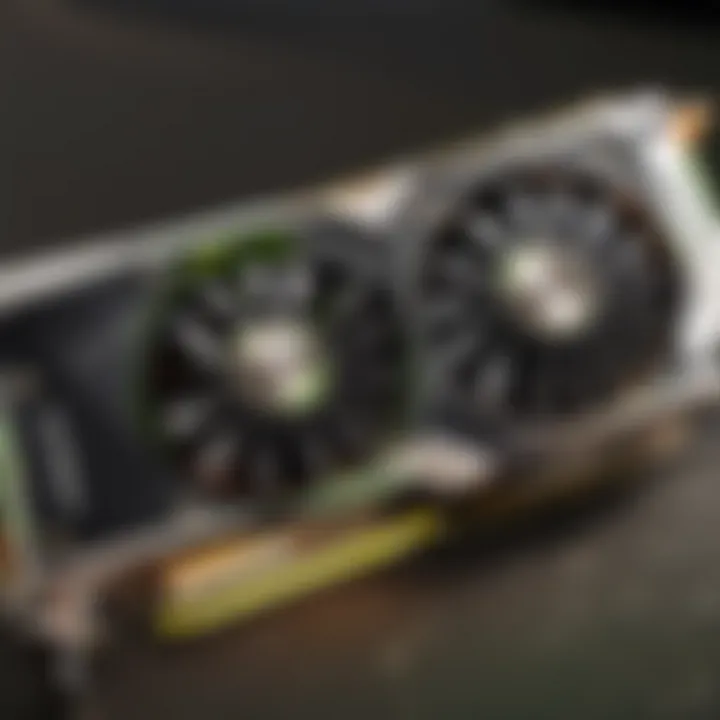
The design and efficiency of the cooling solutions in the RTX 3080 Founders Edition are truly noteworthy. Featuring a radical push-pull design, the card draws air in from the front and exhausts it out the back. This unique engineering not only helps maintain lower temperatures but also prevents heat buildup inside the case. The dual axial fans are central to this process, with one fan spinning in reverse to boost airflow. As a beneficial attribute, this contributes significantly to system stability during long gaming sessions.
However, a potential downside to this efficiency is that it demands ample space. If your setup is cramped, fitting this card snugly may transform into a guessing game.
Noise Levels
In terms of noise levels, the RTX 3080 Founders Edition manages to keep things relatively quiet. The fans operate efficiently under load, but are noticeably absent during less intensive tasks, allowing users to enjoy a peaceful environment. This characteristic is especially appealing for gamers who appreciate a serene atmosphere while tinkering with their favorite titles. Notably, the card uses a low-noise impeller design, thus minimizing the whirring sound that many gamers dread. However, when pushed to the limits, one might hear a hum, so it may not be suited for every noise-sensitive user.
Impact on Performance
When it comes to performance, the cooling solutions play a pivotal role. The RTX 3080's power is unleashed due to effective thermal management, providing high frame rates and seamless gameplay experiences. As temperatures stay in check, the card operates at peak capabilities, making it particularly advantageous for competitive players. Yet, this impact isn't without compromise—if the system is not adequately ventilated, users may still encounter thermal throttling. Proper airflow in your gaming rig remains essential to harness the full potential of the card.
Build Quality and Aesthetics
Design Philosophy
The design philosophy behind the RTX 3080 Founders Edition exudes a modernistic flair that's hard to ignore. Its angular lines and clean profile reflect a sophisticated approach, ensuring that it not only performs well but also looks great in any build. The aluminum construction adds a premium feel, attracting an audience that values aesthetics just as much as capability. However, with that premium build comes a trade-off: it’s heavier than many counterparts, potentially impacting installation if the case isn't sturdy enough.
Material Choices
Material choices reflect durability and performance, with NVIDIA opting for high-quality components to ensure the longevity of the RTX 3080. The card incorporates a sturdy backplate that not only adds to the aesthetic appeal but also provides structural integrity, effectively preventing warping during usage. This added durability enhances the perception of quality among users. Yet, the sleek finish can attract fingerprints easily, making it require more upkeep to maintain that pristine look.
User Perception
User perception plays a crucial role in the desirability of the RTX 3080 Founders Edition. The impressive design and build quality generate a strong positive response among gamers. Many view the card as a status symbol, reflecting superior choice in hardware. This perception translates to what some might call a “premium aura,” which can elevate the gaming setup visually. However, there are those who argue that focusing solely on looks can detract from the overall performance being offered, leading to debates that vary among different users.
"The careful balance between aesthetics and performance is what sets the Founders Edition apart from its competitors. It’s an embodiment of engineering and artistry in one package."
Power Requirements and Efficiency
The power requirements and efficiency of the NVIDIA GeForce RTX 3080 Founders Edition are critical factors to consider. A card's power consumption is more than just numbers on a spec sheet; it directly affects the performance, stability, and longevity of a gaming rig. Getting to grips with power consumption can make the difference between an optimal setup and a system struggling to keep pace with demanding titles.
Power Consumption Analysis
Total System Power Requirements
When discussing total system power requirements, it's important to start with the RTX 3080’s rated consumption: approximately 320 watts. But the actual number can wiggle quite a bit depending on numerous variables such as the CPU, motherboard, and peripheral demands. Let’s be clear, what this means is that gamers should consider power supplies capable of delivering around 750 watts to ensure there’s enough juice for the entire setup, while also allowing some headroom for future upgrades.
- Key Characteristic: An essential point about total system power requirements is scalability. This allows enthusiasts to tweak components without worrying that they’ll overburden the power supply.
- Benefits: With a solid power supply, you get stable performance, less risk of power surges, and extended component lifespan.
- Unique Feature: The headroom for upgrades means if gamers want to add another GPU or overclock, they won’t need to upgrade their PSU immediately.
Comparative Efficiency
Now, let’s shift gears and look at comparative efficiency. When you compare the RTX 3080 against its predecessors, the efficiency metrics speak volumes. Given that NVIDIA has made strides in architecture, it’s not merely about raw power consumption.
- Key Characteristic: The efficiency of the RTX 3080 translates to more performance per watt, something that’s more than just a number—it reflects on practical gaming performance.
- Benefits: Gamers can enjoy high frame rates without pushing their power supplies to the brink, resulting in fewer thermal management challenges.
- Unique Feature: This efficiency can be mind-blowing for competitive players, allowing them to maintain an edge in gameplay without compromising on system stability.
Impact on System Build
The impact on system build cannot be overstated. The power demands of the RTX 3080 shape how gamers plan their setups. The realities of power and space mean that the choice of PSU influences overall build performance and stability.
- Key Characteristic: For instance, compatibility of power supplies with modular options can enhance cable management in tight setups, contributing positively to airflow.
- Benefits: It guarantees that system builds remain tidy, enhancing thermal performance—something gamers will appreciate during long hours of intense gameplay.
- Unique Feature: Well-considered power requirements mean fewer unexpected failures; systems run smoothly, which is invaluable in high-stakes competitions.
Recommended Power Supply Units
When embarking on a build that includes the RTX 3080, selecting the right power supply unit becomes paramount. It is advisable to seek out well-reviewed brands that emphasize reliability and efficiency. Look for units that offer a good balance of power capacity and 80 PLUS certification; those can often ensure long-term durability and peace of mind.
In summary, power requirements and efficiency are not mere technical specifications. They play a pivotal role in shaping user experience, especially in the domain of competitive gaming. With the right understanding and setup, the NVIDIA GeForce RTX 3080 Founders Edition can indeed be a game-changer.
Compatibility and Installation Considerations
When diving into the realm of high-performance graphics cards like the NVIDIA GeForce RTX 3080 Founders Edition, understanding compatibility and installation factors can’t be overlooked. This topic is crucial for gamers, particularly those engaged in competitive environments such as Dota 2, where hardware can significantly impact performance and user experience. An essential first step in maximizing the potential of the RTX 3080 is ensuring it will integrate smoothly into your existing system setup.
Motherboard Compatibility
The motherboard serves as the backbone of your computer, linking all components together. For the NVIDIA GeForce RTX 3080, it's vital that the motherboard has a PCIe 4.0 x16 slot available, which can efficiently handle the bandwidth that this card requires for optimal performance. Even if a system has only a PCIe 3.0 slot, the RTX 3080 can still work, but it might not perform at peak efficiency due to bandwidth limitations.
- Chipset Support: Check for a compatible chipset; examples include B550, X570 for AMD systems, and Z490, Z590 for Intel setups. Each of these supports the specifications necessary for the RTX 3080.
- BIOS Updates: Some older motherboards may require a BIOS update. It’s always smart to visit the manufacturer's website and ensure your BIOS is up-to-date before installation.
- Slot Availability: Consider the physical layout within your case. Ensure that you have the available space not only for the width of the RTX 3080 but also for any additional components.
The success of your graphics card installation hinges on ensuring every piece of hardware plays nicely together.
Case Size and Layout
The case you choose also plays a significant role in how well the NVIDIA GeForce RTX 3080 performs and operates. Space constraints can impact airflow, cooling efficiency, and ultimately, the lifespan of your components. Here are some factors to weigh in:
- Case Size: The RTX 3080 Founders Edition is a large card. Ensure that your case can accommodate it without stress. The card measures around 12.3 inches in length.
- Airflow Management: A case with good airflow is primordial, especially when running demanding games or applications. Make sure there’s proper clearance for intake and exhaust fans.
- Cable Management: Good cable management in your case will not only enhance the aesthetic but will improve airflow as well, allowing the GPU to remain cooler under load.
Choosing the right case can make all the difference. Gamers dedicated to extensive gaming sessions know how frustrating overheating can be, and proper case selection can mitigate this.
Taking the time to examine these compatibility and installation considerations will not only prepare you for the future but will also enhance your overall gaming experience. Ensuring that the NVIDIA GeForce RTX 3080 fits seamlessly into your computer means maximizing its potential and enjoying every moment in the gaming environment.
Future of Graphics Technology
The landscape of graphics technology is ever-evolving, primarily influenced by components like the NVIDIA GeForce RTX 3080 Founders Edition. This development has stirred conversations about how advancements shape our gaming experiences and expectations. Focusing on GPUs like the RTX 3080 is crucial, as they not only enhance visual fidelity but also improve gameplay mechanics across various genres.
Implications of RTX Technology
Ray Tracing Impact
Ray tracing has emerged as a ground-breaking advancement in rendering graphics. This technique simulates the way light interacts with objects, producing hyper-realistic visuals. For gamers, the most significant impact of ray tracing lies in its ability to create lifelike reflections, shadows, and lighting dynamics. This level of graphical realism transforms ordinary gaming scenarios into stunning visual experiences.
The key characteristic of ray tracing is its intricate calculation of light paths. However, implementing this technology demands significant processing power and advanced hardware, often leading to discussion about performance trade-offs. It’s noted that while it can drastically elevate graphics quality, it may also lead to lower frame rates if the hardware isn't sufficient enough, making optimization a key goal for developers.
DLSS Advancements
Deep Learning Super Sampling (DLSS) is another standout feature, enabling efficient graphics processing without compromising quality. What sets DLSS apart is its smart upscaling of lower-resolution images to look like their higher-resolution counterparts. This is achieved through machine learning techniques, effectively lightening the load on GPUs during intensive graphics rendering tasks.
The unique feature of DLSS lies in its capacity to deliver higher frame rates alongside enhanced visual fidelity. Players can enjoy smooth gameplay without the sacrifice of graphical detail. However, it's worth noting that the effectiveness of DLSS varies by game and implementation, suggesting that while it's a powerful tool, it isn't a one-size-fits-all solution.
Future Gaming Expectations
Looking ahead, gamers can expect further innovations fueled by technologies like RTX and DLSS. The integration of these systems is likely to establish new benchmarks in how games are developed. With real-time ray tracing becoming a standard in new titles, the expectation is that graphics will continue to approach photographic realism, reshaping player experiences fundamentally.
As graphic technologies advance, we can also anticipate more responsiveness in gameplay, where visual fidelity will not only improve but also align more closely with the intricacies of gameplay mechanics. This balance between aesthetics and function is increasingly seen as a vital direction for future developments.
Market Trends and Predictions
Emerging Competitors
The graphics technology market is witnessing a surge in competition, with various players stepping into the arena, each aiming to carve out their niche. Companies like AMD with its Radeon RX series have begun to make headway against NVIDIA, raising the stakes in terms of performance optimization and pricing strategies.
The unique feature of these emerging competitors lies in their innovative approaches to thermal management and power efficiency. While NVIDIA remains a dominant player, these challengers often introduce enticing alternatives that cater to budget-conscious consumers, marking a noteworthy shift in a market spotlighted by high-performance price tags.
Technological Innovations
Technological innovations are at a boiling point, with new ideas constantly emerging. Mirrorless display technology, for example, is opening doors for enhanced refresh rates and better image quality. The industry's focus seems to be shifting towards combating latency issues and enhancing the overall gaming experience.
The crux of innovations in the marketplace stresses dual goals: performance enhancement paired with energy efficiency. As gamers demand more, it falls upon these innovations to meet those heightened expectations while ensuring that systems remain accessible and user-friendly.
Player Expectations
Finally, let's delve into player expectations. The modern gamer is increasingly discerning, requiring not only superior graphics and framerates but also an immersive experience that incorporates social and interactive elements. This expectation is revolutionizing how developers approach game design, focusing on creating worlds that are engaging on multiple levels. Whether through virtual reality, online multiplayer experiences, or cross-platform play, the emphasis is on building a comprehensive gaming ecosystem.
The unique feature of current player expectations lies in their demands for not just gameplay but the entire package—graphics, sound, and interactivity. This holistic approach encourages developers to rawl into more profound storytelling and community-sourced gameplay experiences.
As technology continues to evolve, the connection between these elements will likely become stronger, reflecting what the future of graphics technology holds for both players and developers alike.