
Exploring Crosshair Dynamics in Gaming Performance
Intro
In the fast-paced world of gaming, particularly in titles like Dota 2, every detail can be the difference between victory and defeat. One element that often flies under the radar but plays a crucial role is the crosshair. This small graphic can significantly influence a player’s performance and overall experience in the game. Why does the design of a crosshair matter so much? How does it impact decision-making in the heat of battle? This article sets out to peel back the layers surrounding these questions, examining the customization options and their psychological fallout on gamers.
As we dive deeper into the various elements, it's crucial to realize that the crosshair isn't just a mere dot on the screen. It's a reflection of a player's style, preferences, and sometimes, their very mindset during gameplay. The highs and lows of competitive gaming hinge on the finer details, and the crosshair is no exception.
So, as we journey through various aspects of crosshair customization, its implications for player performance, and the broader psychological factors at play, we’ll gather insights that could prove invaluable in enhancing your gaming experience. Hold onto your controller—this isn't just about aiming; it's about targeting your true potential.
Prelude to Game Crosshair
In the fast-paced world of gaming, a crosshair might seem like a simple tool, but it's a vital element that can sway the outcome of any match. Whether you’re navigating the tumultuous lanes of Dota or engaging in fierce first-person shooter battles, the crosshair serves as the focal point for aiming, targeting, and making quick decisions. Understanding the nuances of crosshair design can bring forth significant advantages for players striving to elevate their game.
Defining the Crosshair in Gaming
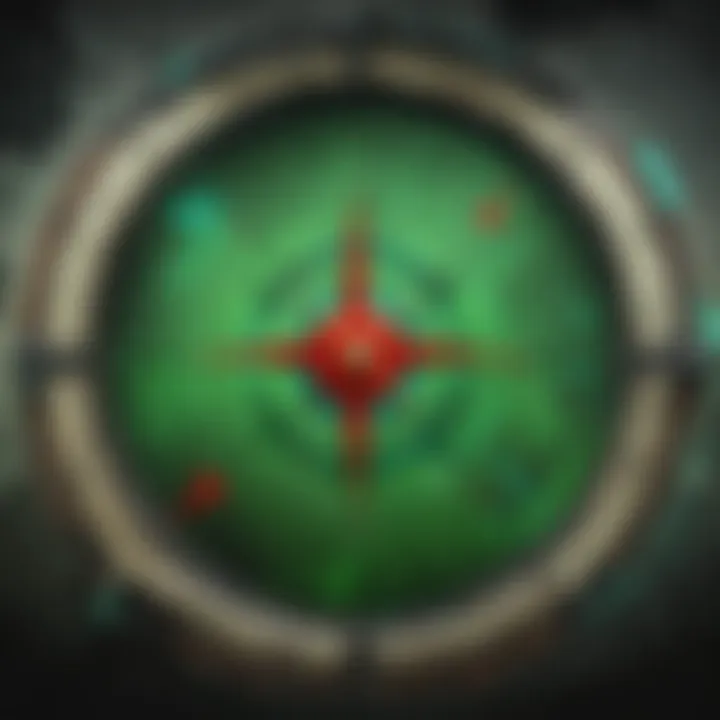
A crosshair is essentially the visual marker that identifies where a player's shots will land in a game. The traditional depiction is a simple intersecting line or dot at the center of the screen. It’s crucial for various genres, including action, strategy, and role-playing games. However, its essence stretches beyond mere calculations of trajectory; it directly impacts player precision and confidence during gameplay.
In practical terms, a standard crosshair consists of several components: the marker itself, its size, brightness, and the color. Each of these elements can be tailored based on personal preference or gameplay requirements. Players often customize the crosshair to align with their unique playstyle, enabling better accuracy and overall performance. Gamers often associate a well-defined crosshair with hitting their target, which in turn translates to game success.
Importance of Crosshair in Dota
In the realm of Dota, the significance of a customized crosshair can’t be overstated. The game’s intricate mechanics and competitive atmosphere amplify the importance of every action taken.
Here’s why the crosshair matters in Dota:
- Targeting Abilities: Dota heroes possess a diverse range of abilities, many of which require precise targeting. A well-designed crosshair enables players to execute skills more accurately, hitting opponents at critical moments.
- Spatial Awareness: Understanding the layout of the game requires constant attention. A clear crosshair helps maintain focus amidst the chaos, allowing for better navigation and improved situational awareness.
- Psychological Edge: Many players develop a sort of "muscle memory" when using a particular crosshair. This familiarity breeds confidence, which can translate to quicker reactions and finely-tuned reflexes in heated exchanges.
- Customization Versatility: Players can adjust their crosshairs to fit different heroes and roles. For instance, support players might prefer a more subtle crosshair, whereas carry players may opt for something more pronounced to ensure accuracy during intense battles.
"A player's success in Dota often hinges on tiny details, and the crosshair is one of those critical elements that can not be overlooked."
In summary, understanding the dynamics of crosshairs in gaming, especially in Dota, is not just a matter of preference; it's a strategic decision that can lead to better performance and outcomes on the battlefield. By exploring this topic, we unravel the layers behind a seemingly simple tool, revealing how it underlies not just tactics but the very psychology of gameplay.
Historical Evolution of Crosshair Design
The history of crosshair design in gaming reflects a journey of practicality and aesthetics. Early games had simple markers, serving merely functional purposes, while modern games boast sophisticated customization options tailored to individual preferences. Understanding this evolution is crucial, as it highlights how crosshairs have become integral to gaming experiences, particularly in competitive contexts like Dota. Not only do players adapt their crosshairs to enhance gameplay, but this personalization also connects deeply with their emotional and psychological comfort.
Early Crosshair Concepts
In the infancy of video gaming, crosshairs were rudimentary and often crude. They typically consisted of a simple dot or a basic reticle. For instance, in games like "Doom" or "Wolfenstein 3D", the crosshair was little more than a pixelated dot, primarily designed for utility rather than flair. These early designs didn’t demand much thought or care; they were simply there to indicate target pointers.
However, even during this time, players began to notice how these design choices could affect accuracy. The notion of a crosshair becoming a tool of skill and precision started to materialize.
Some of the first significant alterations emerged from the first-person shooter genre, where precision was key. Players often experimented with adjusting screen settings to enhance visibility, inevitably paving the way for a more adaptive approach to crosshair design. Importantly, the connection between early design and player effectiveness began to blossom, revealing that a seemingly small element can have significant implications for performance.
Transition to Modern Gaming
As gaming technology advanced, so too did crosshair designs. The transition into 3D graphics in the late 1990s brought with it more intricate design possibilities. Games began incorporating highly customizable features, impacting how players interacted with their avatars and the environment. Titles like "Counter-Strike" and "Call of Duty" led this charge, shifting the landscape of crosshair customization.
Today's games allow players to choose from a plethora of configurations. This includes options for different shapes, sizes, colors, and even dynamic responses based on movement or weapon recoil. Players can modify their crosshairs according to personal preferences, which can be a tactical advantage in gameplay situations.
- Impactful Features of Modern Crosshairs:
- Dynamic Crosshairs: Adapt based on in-game actions like sprinting or crouching.
- Color Customization: Allows for better contrast against various backgrounds, aiding visibility.
- Shape and Size Variability: Custom shapes can be tailored to individual aiming styles.
"The evolution from basic markers to advanced customization reflects not only technological advancement but also a growing understanding of player psychology and performance needs."
The evolution of crosshair design illustrates a pivotal shift in gaming culture. The once simple marker has transformed into a complex element related to player identity and efficacy. Such evolution isn’t purely aesthetic; it’s intertwined with the strategies and skills that define success in competitive gaming realms.
Types of Crosshairs
Understanding the different types of crosshairs is fundamental to optimizing gaming performance. This section dives into how crosshairs can make or break a player’s effectiveness in fast-paced environments. It’s more than just a dot on the screen; it’s a key element of your arsenal. Players armed with the proper knowledge can significantly enhance their gameplay through meticulous choices in crosshair type.
Static vs. Dynamic Crosshairs
The debate between static and dynamic crosshairs often evokes passionate opinions, like the age-old argument about which gaming mouse is the best. A static crosshair remains firmly anchored in the center of the screen, providing a consistent point of aim. This simplicity can be advantageous for players who need precise, consistent targeting. Additionally, it offers some comfort to those who rely heavily on muscle memory. You get used to it, that’s for sure.
On the flip side, dynamic crosshairs expand and contract based on player movement and shooting, creating a visual feedback mechanism that adapts to the player’s actions. This type could enhance a more intuitive understanding of where shots might land, especially useful for gamers who thrive in chaos, like those skirmishing in Dota. It brings an element of excitement, as players can gauge their accuracy in real time based on the crosshair’s behavior.
"Choosing the right type of crosshair can be the subtle difference between victory and defeat."
Color Variations and Their Impact
Colors do more than just brighten up your screen—they can seriously affect your play. Picking the right crosshair hue can heighten visibility against varying backgrounds, an often overlooked detail that can sharpen your edge in competition. Bright yellows or neon greens tend to pop, catching the eye more efficiently than traditional colors like red or blue.
Moreover, personal preference plays a huge role; some players might feel more comfortable with softer tones that reduce glare. Think about how certain colors make you feel—this psychological aspect shouldn’t be tossed aside. The right color can enhance concentration, thus influencing how well players track their target.
Shape and Size Preferences
When it comes to crosshair shape and size, personal comfort is the name of the game. Different shapes—like circles, squares, or more abstract designs—offer unique advantages. A circle crosshair might excel in sniper scenarios, where pinpoint accuracy is a must. In contrast, a sharper shape could be ideal for devouring opponents in close quarters.
Size is another crucial factor. A larger crosshair could provide a more forgiving target in fast-action scenarios, yet it might also obstruct your view. Conversely, a smaller one allows for higher precision, but may pressurize you into only firing when certain.
The decision is personal, guided by gameplay style and the specific demands of the games you encounter, whether you are diving headfirst into Dota or another competitive thrill-ride.
Evaluating these attributes helps in fine-tuning what some gamers might refer to as their shooting “armor.” Making informed choices is vital for anyone serious about improving their game.
Customization Techniques for Crosshairs
Customization of crosshairs is a vital component for any gamer willing to enhance their performance and overall experience in games, particularly in competitive settings like Dota. Tailoring the crosshair to suit individual preferences can significantly impact gameplay accuracy and player comfort. Each player has unique needs and styles, and quite often, the default settings don't cut it. Personalizing the crosshair is not just about aesthetics; it dives into the heart of what makes a player feel confident and prepared in any game situation.
When players dive into the customization pool, they not only fine-tune the visuals of their crosshair but also adjust essential factors like size, color, opacity, and sometimes even the shape of the cursor. In this light, customization becomes a strategy for both comfort and performance.
In-Game Settings for Crosshair Adjustment
In every game environment, the in-game settings for crosshair adjustment often serve as the first stepping stone for players willing to tweak this crucial element. Most games provide a range of options directly in their settings menu, allowing players to create a crosshair that aligns specifically with their gameplay style.
Among the key adjustments available are:
- Size: A larger crosshair can be easier to see but may obstruct the view of an opponent. Meanwhile, a smaller crosshair might give precision but can sometimes blend into the background.
- Color: Choosing a color that contrasts well against the game’s environment can make a crosshair far more effective. For instance, neon colors tend to pop against darker backgrounds, making target acquisition more straightforward.
- Outline and Opacity: Adjusting the outline thickness and transparency can help your crosshair stand out without being too distracting. An outer glow or shadow might also enhance its visibility, depending on personal preference.
These adjustments might seem small, but they contribute massively to a player's focus and comfort during intense situations. For example, many Dota players lean towards a vibrant green or bright red crosshair, which remains visible against the various in-game terrains. If one spends time tweaking these settings, it could lead to better performance overall.
Utilizing External Tools and Mods
As technology progresses, players have begun to explore external tools and modifications to take their crosshair customization a step further. These mods can either enhance the in-game options or provide new features that standard settings may lack.
Some noteworthy tools include specialized software that integrates seamlessly with popular games like Dota 2, allowing for extensive customization options, such as:
- Custom Crosshair Generators: These tools can offer users unique designs that go beyond basic adjustments. Players can fine-tune the shape, animations, and even create dynamic crosshairs that react to gameplay elements.
- Overlays and HUD Customizations: Some players might also turn to overlay software that allows them to set up additional visuals that show stats or create customized indicators for crosshair performance.
- Community Mods: Platforms like Steam Workshop offer mods shared by the gaming community, where players can upload and download specific crosshair styles that they have created or modified.
Using these tools might involve a bit of a learning curve. However, those willing to invest their time could discover a game-changing synergy between their skills and an optimized crosshair. As always, experimenting with these settings and tools is crucial; by trying different configurations, players might stumble upon a setup that becomes their secret advantage in competitive gameplay.
"The road to mastery is through customization. It's not just how you play; it's how you see your game."
With such a vast array of customization techniques, both in-game and through external tools, the journey towards finding the perfect crosshair becomes an engaging aspect of a player’s development. Through careful tweaking and exploration, gamers can carve out a visual identity that speaks to their personal style while enhancing their performance.
Psychological Aspects of Crosshair Usage
The connection between a player's mental state and their performance is evident in many avenues of esports, and crosshair usage is no exception. It's fascinating how the seemingly simple aspect of a crosshair design can impact a player's focus, emotional state, and ultimately their gameplay. Understanding these psychological aspects can lead to significant improvements in performance, especially in a game as demanding as Dota 2.
The Influence of Visual Focus
Visual focus refers to the ability to concentrate on specific elements within a game while filtering out distractions. A well-designed crosshair can immensely aid in maintaining that focus. When a player's crosshair stands out against the game environment, it can direct attention toward the target, reducing cognitive distractions.
For example, consider a player using a bright green crosshair against a darker background. This contrast can significantly enhance target acquisition, enabling quicker reactions and better aim. Conversely, a poorly designed or hard-to-see crosshair can create frustration. The player might find themselves straining their eyes or shifting their focus away, leading to missed shots and bad decision-making. In Dota 2, where split-second decisions can be the difference between victory and defeat, this can’t be overstated.
"The crosshair isn’t just a marker; it’s the aiming compass for players navigating chaotic battlefields."
Cognitive Load and Performance
Cognitive load refers to the oxygen tanks we fill when processing information. In gaming, it encompasses the mental effort required to understand and react to in-game stimuli. A simplistic crosshair can lessen cognitive load, allowing players to focus more on strategy and less on aiming mechanics.
Players dealing with heavy cognitive load might find themselves overwhelmed in critical game situations. If the crosshair design demands excessive thought—too many colors or shapes, for instance—players divert mental resources away from tracking enemy movements or planning their next attack. A streamlined crosshair can lead to better mental clarity and quicker reflexes when it counts.
Summary
Ultimately, the psychological aspects of crosshair usage go beyond just orientation on the screen. They encompass visual focus, cognitive load, and the mental state that players tap into during high-stakes moments. As gamers seek every advantage in competitive play, understanding and utilizing the principles behind effective crosshair usage can be a game-changer, setting apart an adequate player from an exceptional one.
Crosshair and Player Skill Correlation
Understanding the link between crosshair choices and player skill is crucial for anyone serious about improving their game in titles like Dota 2. While many might assume that a fancy design or vibrant color will automatically lead to better performance, the reality is far more complex. The right crosshair can help players refine their aim, boost their confidence, and elevate their overall gameplay. This section delves into two main aspects—assessing skill levels in relation to crosshair choices and adapting those choices for competitive play.
Assessing Skill Levels and Crosshair Choice
Every player is unique, wielding a different blend of skills, styles, and preferences. This individuality extends to crosshair selection, where a variety of factors come into play. For instance, novice players might benefit from static crosshairs, characterized by their simplicity and lack of movement. Such designs can allow new gamers to focus on their aiming mechanics without unnecessary distractions. In contrast, experienced players often gravitate towards dynamic crosshairs that adjust with movement and shooting. These crosshairs provide a more accurate representation of the player's actual performance, allowing for a greater understanding of their capabilities.
- **Beginner Players:
- **Intermediate Players:
- **Advanced Players:
- Preference for simple static designs.
- Advantages include reduced visual noise and better focus on targets.
- Opportunity to build muscle memory without overwhelming details.**
- Might alternate between static and dynamic options based on situational needs.
- Informative cue on accuracy and movement, aiding in skill transition.
- Gaining confidence to experiment with different shapes and sizes.**
- Lean heavily toward crosshairs that offer detailed feedback.
- Benefit from insights into performance metrics, like accuracy percentages.
- Fine-tuning crosshair settings can have a profound impact on high-stakes gameplay.**
Understanding these trends allows players to tailor their crosshair to not only reflect their skill level but also aid in improving it.
Adapting Crosshair Strategies for Competitive Play
The competitive landscape in gaming is fierce and unforgiving. Players must constantly adapt their strategies in order to succeed. A well-chosen crosshair can serve as an invaluable tool in a player's arsenal. For instance, during intense matches, players might find themselves requiring crosshairs that offer clear visual cues without being overly distracting. This often translates to specific size and color choices that can stand out against various in-game environments.
Moreover, adaptability extends to ongoing adjustments based on individual performance. Players may recognize the need to switch crosshairs in response to fatigue, changes in gameplay dynamics, or specific opponents’ techniques. This level of flexibility showcases the interplay between a player's skill and the effectiveness of their chosen crosshair.
"A well-configured crosshair is like a well-fitted glove; it just clicks into place, letting you focus on the game without unnecessary strain."
In summary, the correlation between crosshair choice and player skill foster an engaging interplay that influences gameplay at all levels. Whether a player is honing their skills or vigorously competing, understanding how crosshairs work with their personal style can provide significant advantages.
Case Studies on Crosshair Effectiveness
Diving into case studies of crosshair effectiveness allows us to peel back the layers on how these seemingly minor settings can greatly affect gameplay performance and the overall experience in games like Dota 2. Crosshairs are not just mere dots or reticles; they are a reflection of player preferences, skills, and even strategies. Understanding how different configurations correlate with success can yield valuable insights for both newcomers and seasoned players alike.
Successful Players and Their Crosshair Configurations
Observing the choices made by successful players can shed light on effective crosshair configurations. There are numerous examples of professional gamers whose specific crosshair settings have become part of their signature styles. For instance, Johan "N0tail" Sundstein, a veteran in the Dota scene, favors a crosshair that is not overly complex. His settings emphasize clarity and visibility, allowing him to focus on the critical elements in gameplay rather than getting distracted by a flashy design. This simplicity is essential, especially during high-pressure situations, where even a fraction of a second can determine victory or defeat.
Many players share their configurations, distilling their setups into a series of videos or online posts. This creates a treasure trove of information for others looking to optimize their gameplay. Players often experiment with opacity, color, and size, and post their findings in various forums. A popular approach has players experimenting with wider crosshairs for grenade throw accuracy or narrower ones for precise sniping.
It’s critical to note that the effectiveness of these crosshair configurations can vary from player to player. Individual comfort with a specific setup greatly influences overall performance. Thus, players should not blindly adopt another's choice but rather tailor their crosshair settings to suit their unique playstyles and preferences.
Comparative Analysis of Crosshair Usage
When we analyze crosshair usage across different ranks and player types, distinct patterns emerge. Players in the lower ranks often gravitate towards default crosshairs, often not aware of the customization options available to them. However, as players progress into higher ranks, the awareness and importance of tailored crosshair designs becomes evident. This transition typically reflects a growing understanding of not only the game mechanics but also the psychology of crosshair selection.
Crosshair features such as dynamic adjustments that change based on the player's actions can greatly enhance a player's performance. For example, traditional static crosshairs used by many novices often lead to a misalignment between shooting speed and target acquisition. In contrast, a well-designed dynamic crosshair that expands when moving can give the player a better sense of where their shots will land as they navigate the battlefield.
- Benefits of Dynamic Crosshairs:
- Drawbacks of Improper Crosshair Choice:
- Improved aiming accuracy by visual feedback.
- Increased engagement with the game mechanics.
- Overwhelming visual clutter can hinder visibility.
- Lead to misinterpretation of shot accuracy, especially under stress.
In summary, as players advance in their understanding of the game, many will notice the crucial role a well-crafted crosshair will play in their performance. This thorough comparative analysis highlights not just the effectiveness of crosshair customization, but also serves as a springboard for players to explore their potential.
As we look ahead, it’s clear that analyzing crosshair effectiveness is essential for continuous improvement within the gaming community. With worth noting findings from successful players and understanding the dynamics behind various setups, gamers are set up for a solid foundation to enhance their skills and performance.
Practical Tips for Optimal Crosshair Use
The effectiveness of a crosshair in gaming can’t be overstated. It’s not just a design element but a fundamental tool that can affect overall performance in a drastic way. Picking the right crosshair can provide players with a sense of confidence and control, which is crucial in the heat of battle. A well-adjusted crosshair can lead to improved aiming precision, better reaction times, and even influence how players position themselves during gameplay. Here, we delve deeper into practical approaches to optimize crosshair use, focusing on experimenting with settings and maintaining consistency in play.
Experimenting with Settings
Understanding that each player is unique, experimenting with crosshair settings can be a game-changer. Dota offers various in-game options for customization that might seem trivial at first but can significantly influence gameplay.
- Color Choices: Selecting the right color can enhance visibility depending on the map environment. Players may find that bright colors stand out in dark areas while other colors may blend too much into backgrounds, leading to missed opportunities.
- Size Adjustments: Some players prefer smaller crosshairs for sharper focus while others might favor larger ones for better visibility. Trying out different sizes can help find a balance that feels right.
- Opacity Levels: Adjusting the opacity can also contribute. For example, an opaque crosshair might be preferred in cluttered parts of the battlefield, while a more transparent version may help during more fluid scenarios.
Adjustments in sensitivity and dynamic settings can also be explored, where a crosshair expands during movement and shrinks while standing still. Playing around with these settings encourages familiarity, and over time players might stumble upon a combination that feels most suited to their style.
Maintaining Consistency in Play
While it’s easy to get caught up in tweaking everything about your crosshair, it’s equally important to prioritize consistency. If players continually change settings, it can lead to confusion and distract from honing their aiming skills. Here are some strategies to maintain a steady crosshair approach:
- Stick to Preferred Settings for a While: Once a certain configuration is decided upon, give it time. Playing with a consistent setup can enhance muscle memory and improve overall efficiency.
- Familiar Gameplay Scenarios: Utilizing crosshair configurations during practice sessions or specific in-game environments can help ingrain those settings into gameplay. This means applying the same settings during training as in competitive matches.
- Review and Reflect: It can sometimes be software or simply a habit that needs to change. Players should consider recording their gameplay. This offers a chance to evaluate crosshair performance over time—whether it works during action or falls short.
"In the world of gaming, adaptability and consistency together can take a player’s skills to the next level. The synergy cultivated through careful crosshair management truly reveals itself when the pressure is on."
By integrating these practical tips into routines, players can leverage their crosshair’s potential. After all, mastering your crosshair isn’t just about personal comfort; it’s about maximizing potential and ensuring peak performance, especially in games where every second counts.
The Future of Crosshair Design
The future of crosshair design is a fascinating topic that carries significant weight in the gaming world. As games continue to evolve, so does the necessity for adaptive crosshair solutions, reflecting the changing needs of gamers. A thoughtfully designed crosshair can enhance visibility, making the game not just accessible but also more enriching. Understanding how these design advancements will unfold helps players stay ahead of the competition while maximizing their in-game performance.
Innovations in Gaming Technology
As technology progresses, the way we interact with games also transforms. One major innovation is the integration of artificial intelligence (AI) into game mechanics. With AI, crosshairs can become increasingly responsive, adjusting their appearance based on the player's in-game actions and overall performance. For instance, a crosshair may change color or shape to indicate health status or ammo count, providing real-time feedback that supports gameplay strategies.
Furthermore, virtual reality (VR) and augmented reality (AR) are shaping the future of crosshair design. In VR environments, developers are experimenting with crosshairs that are not only dynamically adjustable but also anchored within the viewer's field of vision, offering an immersive experience.
"As crosshairs evolve, they will blend seamlessly into the immersive environments of VR and AR, raising questions about user adaptability and game mechanics that follow suit.
Additional innovations could include haptic feedback systems that provide sensory responses when players aim accurately or miss a target. Sensors embedded in gaming peripherals might enhance the experience further, giving players a tactile sense of success or failure.
Potential Trends in Crosshair Customization
Customization will remain a cornerstone of crosshair evolution. As esports gains more traction, players will seek highly personalized setups to enhance their individual gameplay styles. One potential trend is the emergence of customizable presets, enabling players to switch between different crosshair designs with a simple click. Such presets might undergo statistical analytics, tracking player preferences, and suggesting optimal configurations based on their gameplay data.
New design elements may also rise to prominence, like animated crosshairs that react to a player's actions—expanding when aiming or contracting during a shot for a clearer focus. There might be discussions about incorporating minimalist designs, stripping away excess information that could distract players.
Not to forget, social media platforms like Reddit and Facebook are becoming crucial for players to share crosshair designs that can help one another. This grassroots movement might inspire trends and foster innovation, urging developers to keep an eye on trending types and colors as they capture the interest of the gaming community.
End: The Crosshair as a Critical Element
Summary of Key Insights
To encapsulate the knowledge shared throughout, several core insights stand out:
- Precision and Consistency: The crosshair allows for greater targeting accuracy, consequently enhancing consistent gameplay performance.
- Customization as a Strategy: Players can adjust their crosshairs according to personal preference, which can lead to significant performance improvements. This customization is not merely about color or shape, but also about understanding how each element affects one's game style.
- Psychological Impact: A familiar crosshair can provide mental comfort, decreasing anxiety in intense situations. When players feel good about what they see on their screen, they engage more positively with the experience.
- Trends and Future Innovations: As gaming technology advances, future designs could further personalize the crosshair experience. Monitoring such evolution can give players an edge in competitive scenarios.
"The crosshair is not just a visual guide; it's a psychological anchor for every moment of action within the game."
Encouraging Thoughtful Exploration
In the complex world of gaming, the crosshair serves as a testament to the importance of personal preferences and adaptability. Players should invest time in exploring and experimenting with different crosshair settings tailored to their unique gameplay styles. Reflecting on this journey is vital; it helps to derive lessons that go beyond the game itself. The crosshair can be a skewed mirror of a player’s skill, revealing interactive elements that could be fine-tuned for better performance.
Moreover, communities around games like Dota 2 often share valuable insights through platforms such as Reddit or Facebook groups dedicated to gamers. Engaging with fellow players can yield shared experiences and tips that bolster one’s understanding of effective crosshair use.
In summary, the crosshair’s influence is omnipresent in competitive gaming. With ongoing reflection and adaptation, players can utilize this critical element to optimize their gaming performance while enjoying the myriad chaotic challenges that come with it.


