
Unveiling the AMD Radeon HD 6970: A Detailed Exploration
Hero Guides
One of the most fundamental elements when delving into the realm of the AMD Radeon HD 6970 is understanding its core architecture and technological underpinnings. This graphics card, renowned for its cutting-edge features and exceptional performance metrics, has captivated the attention of many gaming enthusiasts. By exploring the intricate details of its design and performance capabilities, readers can gain a profound insight into why the Radeon HD 6970 stands tall in the realm of graphical processing.
When it comes to unpacking the skills and leveling guide of the AMD Radeon HD 6970, it is crucial to decipher how each component contributes to its overall prowess. From memory bandwidth to clock speeds, each specification plays a pivotal role in shaping the graphics card's performance. Understanding how to optimize these elements through proper levels and settings can significantly enhance the gaming experience, making every frame smoother and more visually immersive.
Itemization and recommended items for the AMD Radeon HD 6970 are a critical aspect that demands attention. From ensuring proper cooling solutions to optimizing power delivery, the choice of components can greatly impact the card's overall longevity and performance. By delving into the recommended items and configurations tailored for the Radeon HD 6970, gamers can unlock its full potential and push their gaming experiences to new heights.
Strategies and tips for playing the AMD Radeon HD 6970 delve into the nuances of maximizing its capabilities in various gaming scenarios. Whether aiming for high frame rates in fast-paced competitive games or achieving visually stunning graphics in expansive open-world adventures, understanding the optimal strategies and tweaks can make a significant difference. By arming oneself with the right knowledge and tactics, gamers can unlock the true potential of the Radeon HD 6970 and elevate their gaming experiences to new levels.
Introduction
The world of graphics cards has witnessed a remarkable evolution over the years, shaping the digital landscape for gaming enthusiasts and professionals. From the rudimentary beginnings of Early Graphics Technology to the modern marvels of GPUs, the journey has been one of constant innovation and technological advancement. The rise of the AMD Radeon Series marked a pivotal moment in this evolution, introducing cutting-edge features and performance capabilities that set new standards in the GPU market.
Evolution of Graphics Cards
Early Graphics Technology
Early Graphics Technology played a foundational role in the development of modern GPUs, laying the groundwork for advanced graphics processing. Despite its simplicity by today's standards, Early Graphics Technology provided a crucial stepping stone towards the intricate designs we see in contemporary graphics cards. Its primary characteristic of basic pixel rendering may seem outdated now, but at the time, it was revolutionary for enabling visual display on computers. This retro technology's endurance lies in its fundamental role in kickstarting the evolution of graphics processing.
Rise of AMD Radeon Series
The Rise of AMD Radeon Series heralded a new era of GPU innovation, solidifying AMD's position as a key player in the graphics industry. With enhanced performance capabilities and a focus on delivering unrivaled graphical experiences, the AMD Radeon Series quickly gained traction among gamers and professionals alike. Its signature feature of advanced graphics acceleration was a game-changer in optimizing visual quality and rendering speeds. While not without its drawbacks, such as higher power consumption, the AMD Radeon Series undeniably contributed significantly to pushing the boundaries of graphics processing.
Significance of AMD Radeon HD
Positioning in GPU Market
The AMD Radeon HD 6970's positioning in the GPU market was strategic, targeting the segment of demanding gamers and professionals seeking high-performance graphics solutions. Its key characteristic of delivering exceptional compute power and rendering performance made it a popular choice among users who prioritized visual quality and speed. However, its relatively higher price point compared to competitors posed a challenge in mainstream adoption, limiting its reach to a niche audience.
Technical Specifications

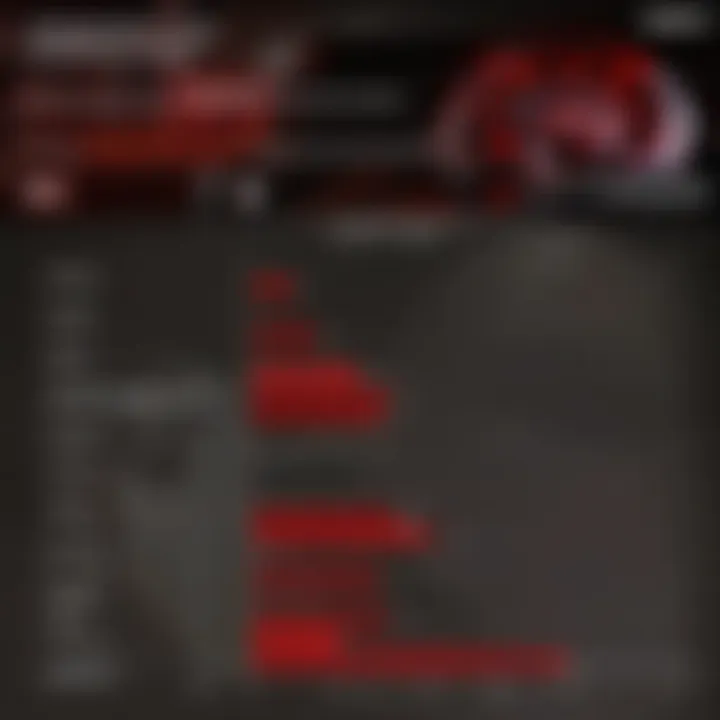
The technical specifications of the AMD Radeon HD 6970 were impressive, boasting a high number of stream processors and a wide memory interface. These features were beneficial in handling complex graphics workloads with ease, ensuring smooth rendering and responsive gameplay. The unique feature of dual BIOS support added a layer of flexibility for users to customize their GPU settings based on performance preferences. Despite its advantages in performance, the HD 6970 faced criticism for its relatively higher power consumption and heat output, affecting its overall efficiency.
Objective of Analysis
Performance Evaluation Criteria
In evaluating the AMD Radeon HD 6970, performance criteria such as graphics rendering speed, frame rates, and overall efficiency are paramount. These criteria provide valuable insights into the GPU's capabilities under different workloads and settings, enabling users to assess its suitability for their specific needs. By considering performance benchmarks alongside real-world applications, a comprehensive understanding of the HD 6970's strengths and weaknesses can be attained.
Comparison Parameters
When comparing the AMD Radeon HD 6970 with its counterparts, key parameters like price-to-performance ratio and feature parity come into play. Assessing how the GPU stacks up against NVIDIA's offerings in terms of value and functionality helps users make informed decisions regarding their graphics card selection. By examining user feedback and long-term reliability, a holistic perspective on the HD 6970's market reception and performance sustainability can be established.
Architectural Insights
In this segment of our analysis on the AMD Radeon HD 6970, we shift our focus to Architectural Insights, a pivotal aspect that underpins the functionality and performance of this graphics card. Understanding the architecture of a GPU is fundamental to grasping its inner workings and capabilities. When delving into the architecture of the AMD Radeon HD 6970, key elements such as Stream Processors and Memory Interface come into play, shaping the overall efficiency and effectiveness of the graphics card. It is vital to explore these architectural facets in detail to comprehend how they contribute to the card's performance and suitability.
GPU Architecture Overview
Stream Processors
Stream Processors form the backbone of the GPU's processing power, handling complex calculations and rendering tasks with precision. The AMD Radeon HD 6970 boasts a robust array of Stream Processors, enabling swift and efficient data processing for enhanced graphics performance. The parallel processing capability of Stream Processors allows for concurrent execution of multiple instructions, optimizing graphics rendering speed and quality. This architecture choice aligns seamlessly with the card's focus on delivering top-tier gaming experiences, ensuring smooth gameplay and visually stunning graphics.
Memory Interface
The Memory Interface plays a crucial role in facilitating communication between the GPU and onboard memory, influencing data transfer speeds and overall performance. The AMD Radeon HD 6970 features a high-bandwidth Memory Interface, allowing for rapid exchange of data with the GPU core. This enables quick access to graphical assets and textures, enhancing rendering speeds and minimizing latency during gameplay. While the Memory Interface accelerates processes and boosts performance, its design also demands efficient memory management to prevent bottlenecks and ensure optimal resource utilization.
CrossFireX Technology
Scalability Factors
Cross FireX Technology leverages Scalability Factors to enable seamless integration of multiple GPUs, escalating graphics processing power for intensive applications. The AMD Radeon HD 6970 harnesses the scalability of CrossFireX to enhance graphics performance, particularly in resource-intensive games and applications. By combining the computational prowess of multiple GPUs, Scalability Factors boost overall graphics processing capabilities, catering to the demands of modern gaming environments that demand high resolutions and frame rates.
Multi-GPU Performance
Multi-GPU Performance is a key highlight of the AMD Radeon HD 6970, showcasing its ability to deliver exceptional graphics performance through parallel processing and resource sharing. The card's support for Multi-GPU configurations maximizes rendering efficiency and frame rates, catering to gamers seeking unparalleled visual experiences. However, optimizing Multi-GPU setups requires careful consideration of compatibility, power requirements, and cooling solutions to maintain stability and performance consistency.
Performance Metrics
Performance metrics play a crucial role in evaluating the efficiency and effectiveness of a graphics card like the AMD Radeon HD 6970. In this detailed analysis, the focus is on understanding and dissecting various performance indicators to provide a comprehensive overview of the GPU's capabilities. By delving into performance metrics, readers can gain insights into how the AMD Radeon HD 6970 performs in real-world scenarios, making informed decisions based on empirical data and benchmarks.
Benchmark Testing
In the realm of benchmark testing, Graphics Rendering stands out as a pivotal element in assessing the AMD Radeon HD 6970. Graphics Rendering encompasses the process of generating visuals on the screen, elucidating the card's ability to handle complex graphical tasks efficiently. The AMD Radeon HD 6970 excels in Graphics Rendering due to its vibrant color representation, sharp image quality, and seamless rendering of intricate visual details, enhancing the overall gaming experience. However, in certain scenarios where high demands are placed on the GPU, Graphics Rendering may face minor lags or rendering delays, impacting the fluidity of gameplay.
Frame Rates serve as another critical aspect in benchmark testing, shedding light on the card's ability to deliver smooth and consistent motion graphics. The AMD Radeon HD 6970 boasts impressive Frame Rates, ensuring minimal stuttering and optimal frame delivery during gameplay. This feature is particularly advantageous for gamers requiring stable frame rates for immersive gaming experiences. Despite its stellar performance, Frame Rates may face occasional fluctuations during resource-intensive tasks, affecting the overall gaming smoothness.
Power Consumption
Efficiency Ratings play a pivotal role in assessing the power consumption of the AMD Radeon HD 6970. Efficient consumption not only influences performance but also impacts the overall sustainability of the GPU. The Efficiency Ratings of the AMD Radeon HD 6970 showcase its ability to optimize power usage, balancing performance and energy efficiency seamlessly. This feature is highly beneficial for gamers seeking impactful performance without compromising on power efficiency.
Thermal Management is another crucial factor to consider, as it directly influences the heat dissipation and overall temperature regulation of the GPU. The AMD Radeon HD 6970 incorporates advanced thermal management systems, ensuring optimal cooling efficiency under varying workloads. This feature aids in maintaining stable performance levels and prolonging the lifespan of the graphics card, making it a preferred choice for dedicated gamers.
Real-World Gaming Experience
High-Resolution Performance is a key determinant of the AMD Radeon HD 6970's gaming experience, offering immersive visuals and crisp details on high-resolution displays. The card's ability to deliver sharp textures, vibrant colors, and seamless graphics at elevated resolutions enhances the overall gaming immersion, catering to enthusiasts seeking top-tier visual experiences. However, in certain instances of extreme gaming scenarios, the High-Resolution Performance may face slight latency, affecting the smoothness of gameplay.
FPS Stability plays a crucial role in ensuring consistent frame rates and smooth gameplay throughout various gaming sessions. The AMD Radeon HD 6970 demonstrates remarkable FPS Stability, maintaining steady frame rates even under demanding conditions. This stability ensures an uninterrupted gaming experience for users, eliminating frame rate drops or inconsistencies that may hinder gameplay fluidity. Despite its commendable performance, occasional frame rate stability issues may arise during intense gaming sessions, impacting the overall gaming experience.
Competitive Analysis
Competitive Analysis plays a pivotal role in this article as it offers a detailed comparison between the AMD Radeon HD 6970 and its NVIDIA counterparts. By analyzing the Price-to-Performance Ratio and Feature Parity, readers can make informed decisions on their GPU choices. This section provides valuable insights into the competitive landscape, helping readers understand the strengths and weaknesses of each graphics card.
Comparison with NVIDIA Counterparts
Price-to-Performance Ratio

The Price-to-Performance Ratio is a critical metric when evaluating GPUs. It determines how much performance you get for every dollar spent. For this article, the Price-to-Performance Ratio showcases the affordability and efficiency of the AMD Radeon HD 6970 compared to NVIDIA's offerings. The AMD Radeon HD 6970 excels in providing excellent value for its performance capabilities, making it a top choice for budget-conscious gamers. However, while cost-effective, it's essential to note any potential trade-offs in features or longevity associated with this ratio.
Feature Parity
Feature Parity examines the similarities and differences in features between the AMD Radeon HD 6970 and NVIDIA's GPUs. By highlighting technological advancements, gaming enhancements, and software integrations, this section sheds light on the unique features of each graphics card. Understanding the Feature Parity allows readers to grasp the competitive advantages of each GPU, assisting them in selecting the best option tailored to their gaming preferences. While feature-rich GPUs offer a compelling gaming experience, users must weigh the benefits against the potential drawbacks to make an informed decision.
User Feedback and Reviews
Community Sentiment
Community Sentiment reflects the collective opinion of users and tech enthusiasts regarding the AMD Radeon HD 6970 and its NVIDIA counterparts. By examining user feedback, readers gain valuable insights into real-world performance, reliability, and customer satisfaction. Understanding Community Sentiment helps gamers gauge the overall reception and popularity of each GPU, guiding them in making well-informed decisions based on community consensus. While positive sentiment indicates a well-received product, varying opinions and criticisms must also be considered to form a comprehensive view.
Long-term Reliability
Long-term Reliability assesses the durability and performance sustainability of the AMD Radeon HD 6970 and NVIDIA GPUs over extended periods. By exploring the long-term reliability of these graphics cards, readers can forecast their longevity and consistent performance in gaming scenarios. Evaluating long-term reliability empowers users to make informed decisions on their GPU investments, considering factors such as build quality, warranty, and technological advancements. While a reliable GPU ensures a stable gaming experience, potential issues or degradation over time should be factored into decision-making processes.
Future Prospects
The aspect of Future Prospects in the context of this article emerges as a critical component that sheds light on the trajectory of the AMD Radeon HD 6970 and its implications for the gaming industry. By exploring the potential advancements and developments in subsequent models, readers can glean insights into the evolutionary path of this graphics card.
Technology Roadmap
Enhancements in Successor Models
Delving into the realm of Enhancements in Successor Models unveils the technological strides that propel the AMD Radeon HD 6970 into the next generation of graphics cards. The focal point lies in the enhancement of processing power, graphics capabilities, and energy efficiency. This represents a paradigm shift in performance standards, promising consumers a superior gaming experience that transcends conventional boundaries. The blend of innovative features and efficient design makes Enhancements in Successor Models a quintessential choice within the AMD Radeon series, setting a benchmark for excellence in graphic processing technology.
Market Adaptation
The concept of Market Adaptation underscores the crucial process by which the AMD Radeon HD 6970 aligns with the dynamic demands of the market landscape. Market Adaptation involves strategic responses to consumer preferences, technological trends, and competitive forces. It epitomizes the card's agility in catering to shifting market dynamics, ensuring its relevance and competitiveness in a rapidly evolving industry. However, while Market Adaptation enhances market positioning and consumer appeal, it may present challenges related to technological obsolescence and fierce market competition.
Innovations in Graphics Industry
Ray Tracing Integration
Ray Tracing Integration epitomizes a revolutionary approach to graphics rendering by simulating the natural behavior of light in virtual environments. The key characteristic of ray tracing lies in its ability to produce stunning visual realism through advanced light reflections and shadow effects. This integration enhances the visual fidelity and immersion of gaming experiences, elevating the AMD Radeon HD 6970 to new heights of graphical prowess. However, the computational intensity of ray tracing poses challenges in terms of hardware requirements and optimization, influencing its adoption in the context of this article.
AI Advancements
AI Advancements mark a pivotal juncture in the evolution of graphics technology, introducing machine learning algorithms to enhance rendering processes and optimize performance. The key characteristic of AI advancements is their capacity to adapt to user behavior, streamline graphics workflows, and amplify overall efficiency. By harnessing the power of artificial intelligence, the AMD Radeon HD 6970 elevates gaming experiences to unprecedented levels of fluidity and realism. Nevertheless, the integration of AI advancements necessitates meticulous calibration and compatibility testing, influencing their pragmatic application in this article.